


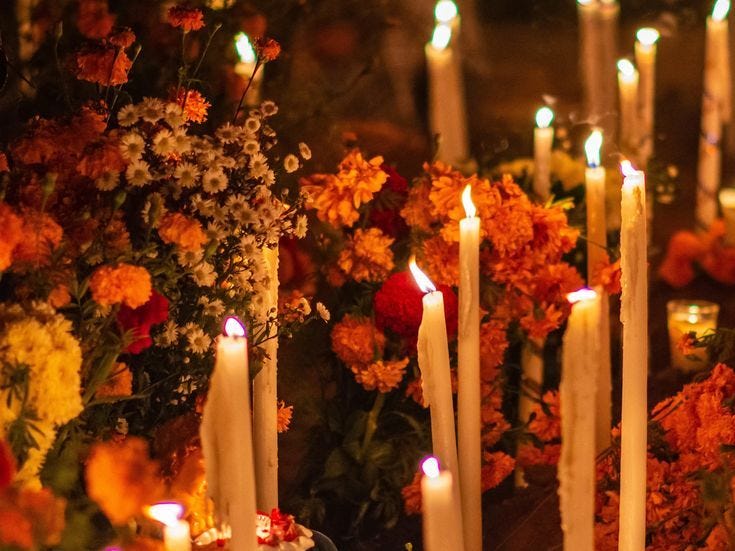
Feisty title, right?
Now that you are here, welcome.
This is not an article about how to make an ofrenda. I am not going to explain Día de Muertos to you. I am here to discuss the social issues the Mexican community faces. And whether you (as a non-Mexican), should take part in these traditions, and what caring for them asks of you.
My friend called last week asking if she could make an ofrenda and if I could help her. She was asking for permission. I was surprised. Because why are you asking for permission?
I asked her, “Why ask me? You celebrate everything. You even celebrate Chinese New Year, and you are not Chinese. You have no association with that culture.”
She said she knew how important this tradition is to us, as Mexicans.
And I get it. She sees the discourse online about how a good portion of Mexicans feel their culture is being appropriated. And since I’m her only Mexican friend she wanted my permission to feel less weird about it.
I told her, “Yes, it is. What is important to me is that you respect it for what it is, and protect it from losing its essence. Because it’s not Taco Tuesday, Ashley. This tradition is very important to the Mexican people.”
It’s not a party to celebrate and get wasted. Margaritas don’t need to be involved. It’s not an aesthetic. This is something to be respected, protected, and treated with care.
If you don’t understand its history or know anything about its community, start there. Do the research. Educate yourself. Just because it’s a beautiful tradition doesn’t mean you need to join in. If it’s not part of your culture, take the time to consider what participating means and what responsibility comes with it.
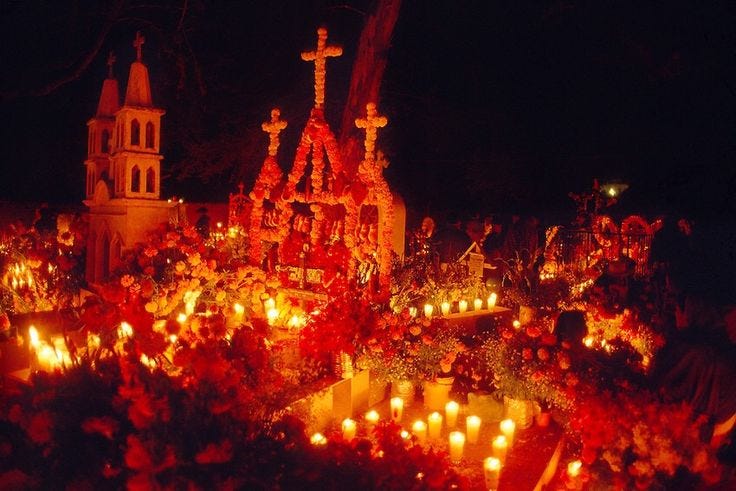
And then I went a little deeper, because this is the elephant in the room.
I told her, “I know your stance on so many of the social issues minorities face in this country. I see you posting about Black Lives Matter and defending the Asian community when COVID happened. I even know your stance on Gaza. But not once have you taken a stance on, or talked to me about, the issues Mexicans and Latinos face in the United States.”
So before you go on and take up traditions that are so important to the Mexican community, figure those things out. It is only respectful that you do.
Because it’s wild to me to see the outpouring of love for a Mexican tradition in the US while so many of us don’t feel safe or welcome here.
It’s 2026, and I still hear, “Go back to your country,” or, “We are going to call ICE on you.” That is WILD. I don’t understand how we have recessed so much as a nation. The fact that there are hotlines and websites where you can report your students or your neighbors if you believe they are undocumented is crazy to me.
I have had my own belonging questioned. I know I don’t look like the stereotypical Mexican people imagine, but I look different enough that people question where I’m from. I know my accent gives me away. And just so you know the genetic pool in Mexico is extremely diverse, we all look different. We have different skin tones, we come in all shapes and sizes. Like my dad has more European features than my husband and he is Anglo-Saxon.

Story Time: Once, my neighbors called the police because my music was too loud. I was playing Lana del Rey while working in my front yard. Suddenly, I saw a police car and an unmarked vehicle pull up in front of my home.
The police officer introduced himself and told me my neighbors had reported a noise complaint. I told him I would lower the music, no problem. I thought that would be the end of it, but it wasn’t.
The police officer asked me, “Are you an American citizen?”
My life flashed before my eyes. I knew that the laws have changed and now they can ask those questions. But nothing can prepare you for it.
“Yes,” I responded.
“By birth?”
“Yes.”
“Where are you from?”
I told him the city I come from in Texas.
“No, where are you really from. Your accent tells me you are not from here,” he said.
So I asked him, “Do you want me to explain how I was born in the US and why I have an accent?”
“Yes, ma’am” he said.
I was gutted. Like, seriously?
So I explained: my mom is American and married my dad, who is Mexican. I grew up in Mexico for a portion of my life and went to school there. Then they divorced, and I moved to the US with my mom.
I won’t go into detail about the rest. But this is just one example, one story among many of what Mexicans and Latinos face in this country.
That is the country I live in. That is the uncertainty we carry. Because apparently, an American citizen is a monolith. An American only looks and sounds a certain way.
This is why I can’t separate the enthusiasm for our traditions from how our community is treated.
Sometimes I feel so lonely seeing the enthusiasm for my culture, my cuisine and my traditions, but no visible solidarity. It hurts.
I have watched people speak openly about other injustices and fall silent about ours.
So if you are thinking of making an ofrenda, first think about the community, the people those traditions belong to. Because you can’t just embrace one part of us and dismiss the rest. It’s not fair.
My concern is that the ofrenda will become party décor or a social media prop. I am worried it will become the next Cinco de Mayo. That people will change elements without understanding their meaning. And that the enthusiasm will end with the celebration, without extending to the people who carry the tradition.
If you do choose to participate, please educate yourself about it. Protect it. Before adding or changing something, understand what is already there and why it matters. That is part of caring for a tradition, you say you appreciate.
I’m writing this so you can ask yourself the right questions before taking up a tradition that is so important to the Mexican community. Learning how to make an ofrenda is only part of that consideration. Your relationship with the living community matters, too.
Questions to ask yourself
What does appreciating a culture ask of us in our relationship with its people?
What draws me to this tradition, and what have I taken the time to understand?
Am I learning from the people who practice it?
Does my appreciation extend to the living community, beyond this celebration?
Am I willing to hear discomfort about my participation without immediately dismissing it?
I hope this conversation gives you perspective.
p.s. I know speaking about this, will open the gates to a multitude of opinions and if you cross the line I will block you.
-Lily Hawthorne
check out some of my other post:


Thanks for being here! Here are other ways you can show your support:
❤️ Tap the heart below (it helps more readers discover my work!)
💌 Share or Restack this post with a friend, it helps me get discover.
🤗 I also share recipes and more writing on my Instagram, TikTok, & Pinterest.